Showing posts with label Environment. Show all posts

Monday, 19 June 2023


THE  AMAZON  RAINFOREST


         The Amazon is reaching an irreversible tipping point. Deforestation in the first half of 2022 was 3 times higher than in the first half of 2017. Deforestation has been increasing year on year for the last 5 years, with no signs of slowing down. Fires continue to spread further every summer. We need to act now. Without the Amazon, we lose the fight against climate change.

Why Is The Amazon Rainforest Important

      South America’s Amazon contains nearly a third of all the tropical rainforests left on Earth. Despite covering only around 1% of the planet’s surface, the Amazon rainforest is home to 10% of all the wildlife species we know about – and probably a lot that we don’t know yet. On average, a 'new' species of animal or plant is being discovered in the Amazon every 3 days. However, tragically, because huge parts of the rainforest are being destroyed so fast, we may never know all the riches it holds.

     The Amazon is of vital importance because people around the world, as well as locally, depend on the rainforest. Not just for food, water, wood and medicines, but to help stabilise the climate around 76 billion tonnes of carbon is stored in the Amazon rainforest., The trees in the Amazon also release 20 billion tonnes of water into the atmosphere per day, playing a critical role in global and regional carbon and water cycles.

About The Amazon

   This vast untamed wilderness is under increasing threat from huge-scale farming and ranching, infrastructure and urban development, unsustainable logging, mining and climate change. Just two quick facts to give you an idea of what’s at stake here.  1) The Amazon has more species of primate than anywhere else on Earth.  2) You can find more types of ant on one tree in the Amazon than you can in some whole countries.

Where is Amazon forest in which country?

     The Amazon covers a huge area (6.7 million sq km) of South America. Nearly 60% of the rainforest is in Brazil, while the rest is shared among eight other countries Bolivia, Colombia, Ecuador, Guyana, Peru, Suriname, Venezuela and French Guiana, an overseas territory of France.

What Is Special About The Amazon Forest?

     The Amazon is one of the world's richest and most-varied ecosystems, Home to over 40,000 plant species, 3,000 fish species, 1,300 bird species, 430 mammals and an amazing 2.5 million different insect species!

Is Amazon Rinforest Man Made?

   Yet it is actually man-made, one of thousands of earthworks built by remarkable but little-known ancient societies. The Amazon prior to the arrival of Europeans in the Americas in 1492 is commonly depicted as a pristine wilderness dotted with small, simple communities.

What Country Owns The Amazon Rainforest?

   The Amazon is a vast biome that spans eight rapidly developing countries Brazil, Bolivia, Peru, Ecuador, Colombia, Venezuela, Guyana, and Suriname—and French Guiana, an overseas territory of France.

How Dark Is Amazon Forest?

 Amazing Facts About the Amazon Rainforest.It's really dark at the bottom

   Throughout large parts of the Amazon, the forest floor is almost completely black as only 1% of sunlight can make it through the thick canopy. In fact, when it rains it takes around 10 minutes for water to seep down to the shrubbery below.

Sunday, 4 June 2023

  • Most Beautiful Waterfalls in the World

  •           One of Mother Nature's most soothing yet exhilarating and beautiful creations in the world is the waterfall. There is just something mesmerizing about watching water tumble off a rock face into a pool or raging river beneath. The noise it makes, the sheer volume of water  it's magical. There are thousands and thousands of waterfalls strewn across the world, but not all are created equal.

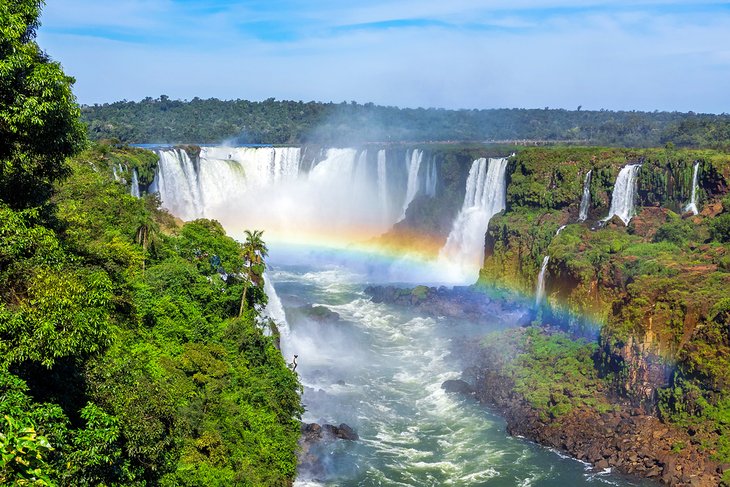
  • 01. Iguazu Falls, Argentina/Brazil

  • Rainbow over Iguazu Falls

    Highlight: The world's largest waterfall, stretching for almost three kilometers

    Iguazu Falls is actually a chain of hundreds of individual waterfalls stretched out almost three kilometers to create the world's largest waterfall on the border between Brazil and Argentina on the Iguazu River. The visual and sound effects of all this water tumbling down some 70 meters is truly like nothing else in the world. The surrounding environs of jungly rainforest are equally beautiful, creating a magical memory you won't ever forget. The falls are protected in a national park and can be viewed from either the Argentine or Brazilian side.

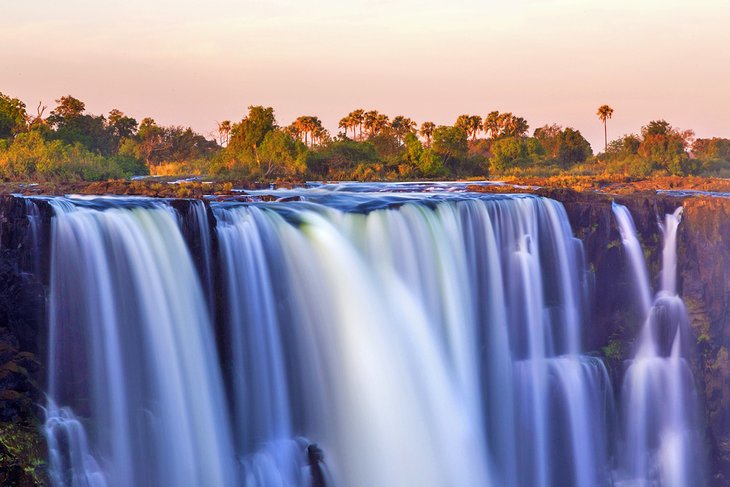
    02. Victoria Falls, Zimbabwe/Zambia

    Victoria Falls

    Highlight: Being a daredevil and taking a swim in Devil's Pool, which is on top of the falls on the Zambian side

    On the Zambezi River between Zimbabwe and Zambia, the UNSECO World Heritage site of Victoria Falls is another of the planet's most beautiful and impressive waterfalls. It's known locally as "The Smoke that Thunders." During the rainy season, you can expect to get soaked walking along the trail on the Zimbabwe side, where the best views of the falls are found. The Zambia side takes you up close and personal with the impressive wall of water that plunges over a 1.7-kilometer-wide precipice that is more than 100 meters deep. You can even swim in Devil's Pool, which is literally at the top of the falls on the Zambian side.

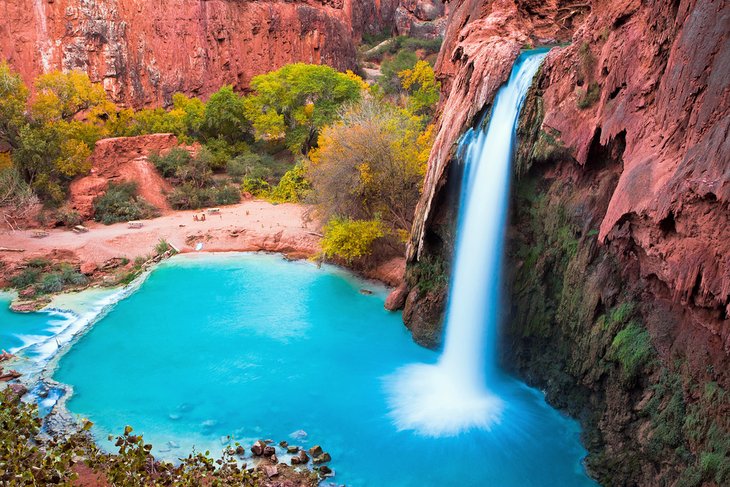
    03. Havasu Falls, Arizona, USA

    Havasu Falls

    Highlight: The bright turquoise pool at the bottom of the waterfall plummets over the orange-red cliffs of the Grand Canyon

    Havasu Falls is the most beautiful of the five Havasupai Waterfalls that plummet over orange-red cliffs into bright turquoise-blue pools in a side canyon of the Grand Canyon. The waterfalls are all located on the Havasupai Indian Reservation and can only be accessed via an overnight 10-mile hike that requires advance reservation and payment of fees — no day hiking is allowed, and you must spend at least one night at the campground in the canyon; most people spend three nights. The number of people allowed into the canyon is limited, and there is often a waiting list to experience this bucket-list-worthy waterfall.

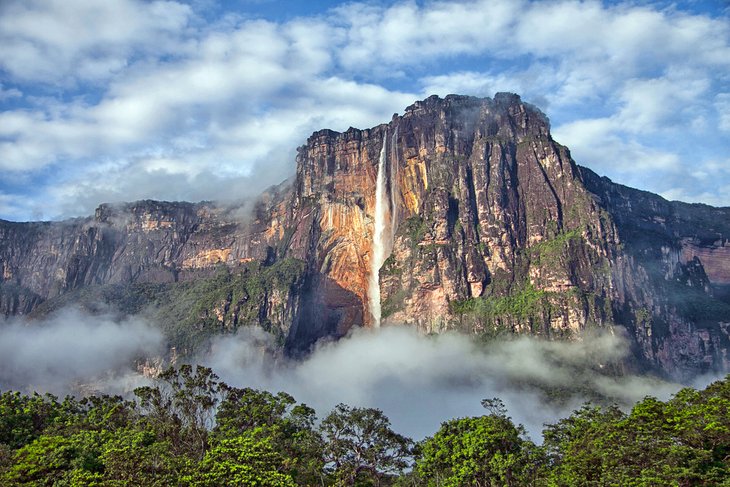
    04. Angel Falls, Venezuela

    Angel Falls

    Highlight: It is the highest waterfall in the world at 3,212 feet

    Located in Venezuela, Angels Falls is the world's highest waterfall at a staggering 979 meters or 3,212 feet — this is 15 times higher than Niagara Falls for comparison. The water comes from the Churun River and does a free-fall drop over the edge of a mountain into a set of white water rapids below. There is a second drop of 30 meters just beyond the rapids. To reach the falls, however, is no easy feat. You'll have to first catch a small plane to the town of Canaima, and then it is a one-day boat ride to the falls.

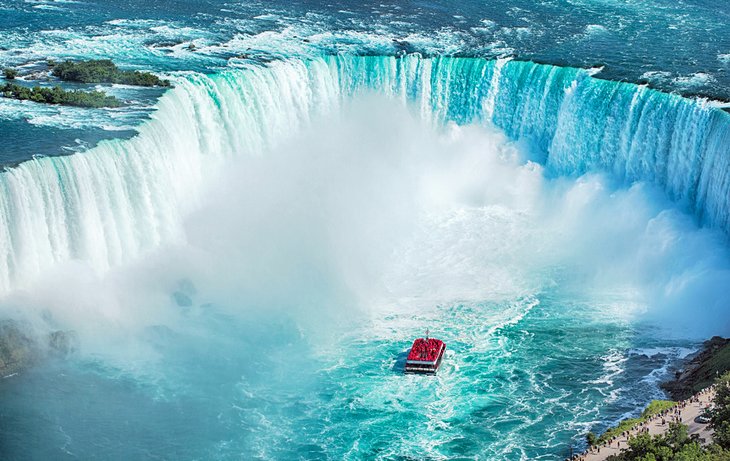
    • 05. Niagara Falls, USA/Canada
    Horseshoe Falls at Niagara Falls

    Highlight: Viewing Horseshoe Falls from Cave of the Winds at the waterfall's mid-point

    It isn't the tallest waterfall in the world, but Niagara Falls is certainly impressive in its scope and power. Niagara Falls is comprised of three waterfalls, the largest of which is Horseshoe Falls. Straddling the border between the USA and Canada, the water cascades 614 feet down Niagara Gorge. The falls can be viewed from a number of viewpoints in New York and Ontario. Cave of the Winds is one of the most unique viewpoints. Here, you will descend 175 feet into the Niagara Gorge to experience the power of the falls mid-flow from the Hurricane Deck. You'll be given a rain jacket because you will get wet.

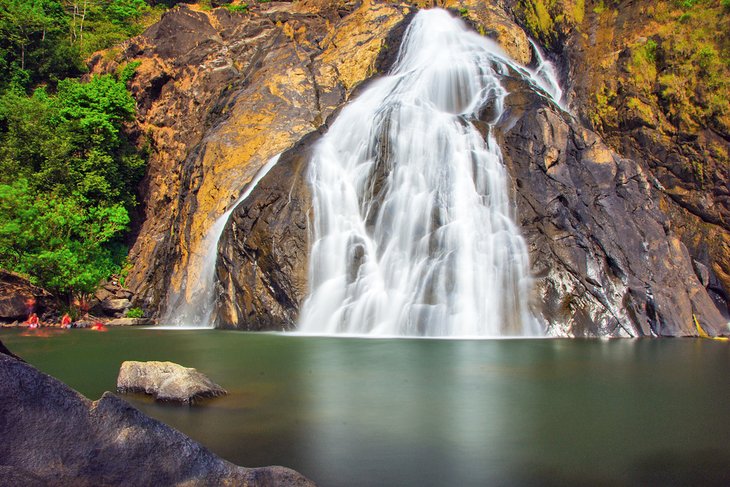
    06. Dudhsagar Falls, India

    Dudhsagar Falls

    Highlight: Drops down more than 1,000 feet in four tiers that are nearly 100 feet wide

    One of India's tallest and most impressive waterfalls, Dudhsagar Falls cascades down more than 1,000 feet in four tiers at nearly 100 feet wide. The speed and force with which the water falls and sprays also gives Dudhsagar Falls its "sea of milk" nickname because this is the illusion it creates dropping into the Mandovi River below. The falls are located in India's Goa province inside the Bhagwan Mahaveer Sanctuary, about 60 kilometers from Panjum and 45 kilometers from Mudgaon.

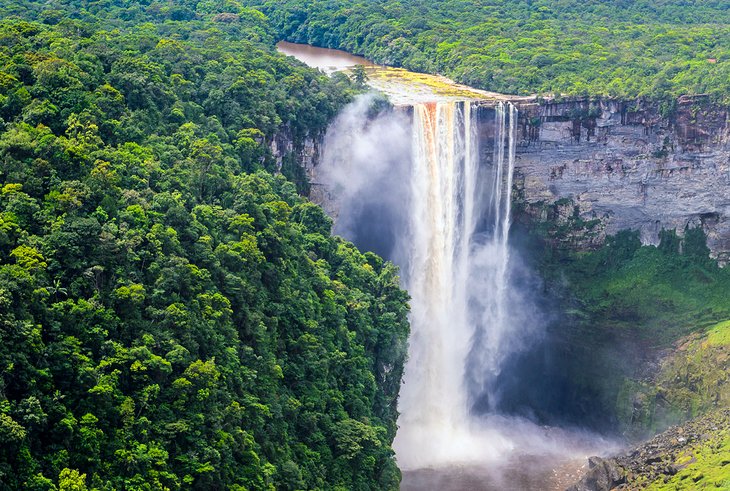
    07. Kaieteur Falls, Guyana

    Kaieteur Falls in Guyana

    Highlight: It's the world's highest single-drop waterfall in the world, hidden deep in the Amazon rainforest

    It takes some serious effort to reach Kaieteur Falls, which is hidden deep in the Amazon rainforest in Guyana. But the reward is the world's highest single-drop waterfall at 226 meters or 741 feet. The falls are accessed via regular flights on small planes from the capital city of Georgetown. From the airstrip landing, it's a 15-minute walk to the top of the falls. Some of the best views, however, are seen flying in and out.

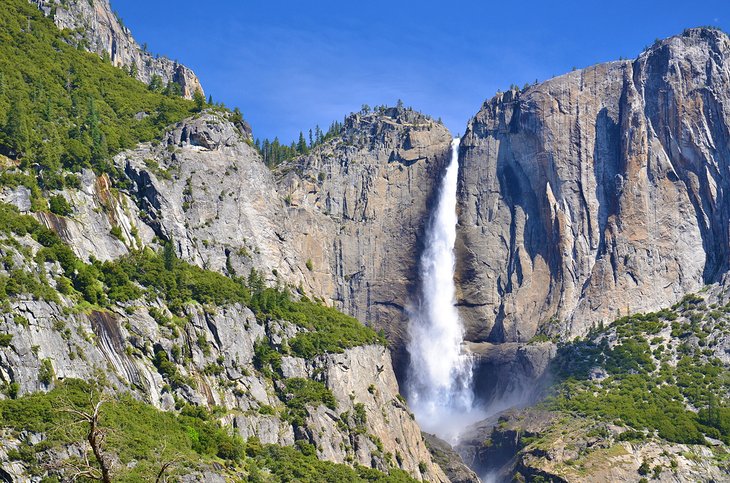
    08. Yosemite Falls, California, USA

    Yosemite Falls

    Highlight: North America's tallest waterfall and the fifth-highest in the world

    Yosemite Falls is the fifth-highest waterfall in the world and the tallest in North America. Located in stunning Yosemite National Park, Yosemite Falls consists of three separate falls with a drop of 2,425 feet that give the illusion of one giant cascade of water. Yosemite Falls is fed by snowmelt, so to see it at its fullest, visit in late spring or early summer when you can hear it thunder from across Yosemite Valley. By late summer, however, Yosemite Falls has dwindled to just a trickle and can go dry by August.

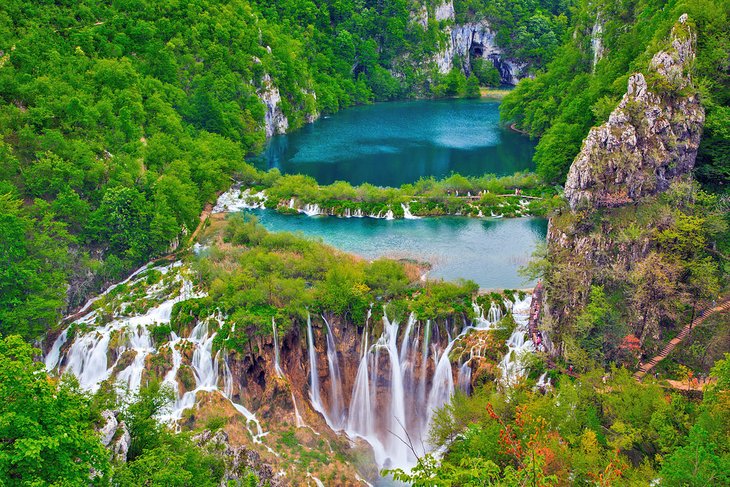
    09. Plitvice Waterfalls, Croatia

    Plitvice Waterfalls

    Highlight: The distinct hues of blue and green that can be seen in the waterfalls

    The 16 cascading lakes that make up the Plitvice Waterfalls in Plitvice Lakes National Park in Croatia are an extraordinary sight. What makes these waterfalls really special though are the distinct shades of blues and greens from aquamarine to emerald and turquoise  that can be seen in the water as it flows over limestone and chalk rocks. All of this is surrounded by a lush green landscape that just makes for a visually stunning tableau. Social media picture-perfect, this park attracts more than one million visitors a year.

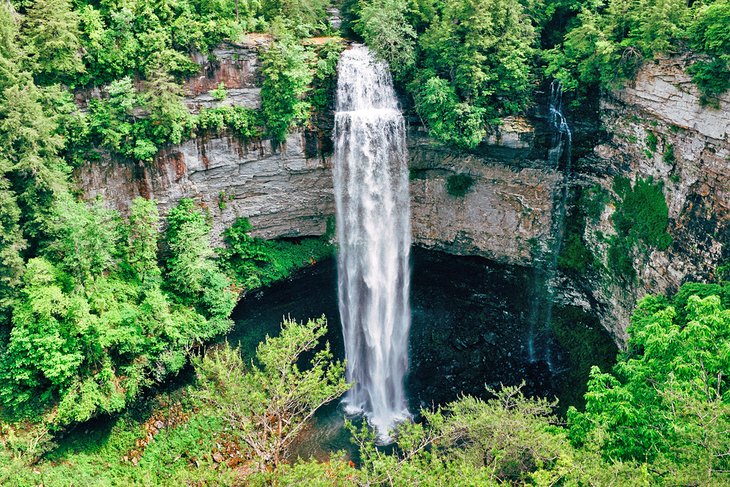
    10. Fall Creek Falls, Tennessee, USA

    Fall Creek Falls

    Highlight: The highest free-fall waterfall east of the Mississippi River in the US

    Dropping for 256 feet, Fall Creek Falls is the highest free-fall waterfall east of the Mississippi River. Located in the eastern portion of the rugged Cumberland Plateau in Tennessee, the waterfalls are part of Fall Creek Falls State Park and can be accessed via a three-mile round-trip hike that gains about 715 feet total. Beyond the main falls, the park is home to five other beautiful waterfalls, as well as cascades, gorges, and 34 miles of hiking trails. You can even stay in a cabin or campsite.

Tuesday, 30 May 2023


A wonderfull gift from mother nature !

- Wulingyuan Scenic Area, China -

      ( Scenic and Historic Interest Area)


         A spectacular area stretching over more than 26,000 ha in China's Hunan Province, this place is dominated by more than 3,000 narrow sandstone pillars and peaks, many over 200 m high. Between the peaks lie ravines and gorges with streams, pools and waterfalls, some 40 caves, and two large natural bridges. In addition to the striking beauty of the landscape, the region is also noted for the fact that it is home to a number of endangered plant and animal species.
Criterion 

Outstanding Universal Value

         The huge number of sandstone columns and peaks more than 3,000 are spectacular. These, coupled with other land forms (natural bridges, ravines, waterfalls, streams, pools and caves) and dense broadleaf forest, present an aesthetically beautiful landscape enhanced by the mists and clouds which frequently shroud the site. There are more than 40 caves and two huge natural stone bridges, one of which rises 357 m above the valley floor. At time of evaluation it was also noted that with additional information there could also be justification for inscribing this property under criterion (x), as this place provides important habitat for a number of threatened plant and animal species such as dhole, Asiatic black bear and Chinese water deer.

Integrity

         The property has within its boundaries all the necessary elements demonstrating the natural beauty for which it was inscribed, as well as a buffer zone. Integrity issues noted at time of inscription include human pressure from use of the reserve by people living in and around it, and the intense pressure from visitors. Numerous tourist facilities also have an aesthetic impact on the natural values of the property. However many measures have been and are still being undertaken to address these issues.


Protection and management requirements

       Wulingyuan was approved and listed as a national key scenic area by the Chinese State Council in 1988, thus has a long history of protection under relevant national and provincial laws and regulations. In 1999, owing to the growing commercialization and loss of natural values, the local authorities declared the Decision of Protecting Wulingyuan World Natural Heritage Property, and began the demolition of houses in the scenic areas. The scenic area was expanded, settlement was reduced and ecological tourism was promoted. By the end of 2002, the adverse impacts on the aesthetic values of Wulingyuan scenic areas had been mitigated. In January 2001, the Hunan Provincial People’s Congress Standing Committee implemented the Regulations on Protection of Wulingyuan World Natural Heritage Property, providing a stronger legal basis for protection. The property is managed by the Administrative Bureau of Wulingyuan Scenic and Historic Interest Area assisted by several other resource management agencies.

       The Office of Heritage Protection was established in 2000 as the operational agency for managing the property and subsequently the Zhangjiajie, Tianzishan, Suoxiyu and Yangjiajie Scenic Area Offices and Protection Stations were established. In total, there are approximately 500 management staff. Museums and visitor centres have been created for research, education and interpretation of the property’s natural values In 2005, the Comprehensive Plan of Wulingyuan Scenic and Historic Interest Area was revised and Wulingyuan World Natural Heritage protection regulations were established to ensure the long-term protection and conservation of the property. The quartz sandstone peaks, columns, karst landscapes, gorges, species, vegetation, ecology, and all other elements that contribute to be aesthetic value of Wulingyuan need to be strictly maintained and monitored.

       The number, seasonal distribution and activities of visitors is scientifically controlled and adjusted so that a dynamic balance between World Heritage, people and the economy is established. In order to deal with the challenges of tourism development and environment protection, special organizations have been established which monitor all the elements contributing to the aesthetic value of the property cited .

Monday, 29 May 2023

Mother Nature has created a land full of natural beauty in the Atlantic Ocean. THE AZORES , PORTHUGAL .


Mother Nature has created a land full of natural beauty in the Atlantic Ocean.

THE AZORES , PORTHUGAL


        Roughly 900 miles off the coast of Lisbon, this Portuguese archipelago can inspire wanderlust with a single photo. The verdant valleys, steep oceanside cliffs, rows of blue hydrangeas, and scattering of waterfalls make the Azores a paradise worth exploring.Azores, Portuguese in full Arquipélago dos Açores, archipelago and região autónoma (autonomous region) of Portugal. The chain lies in the North Atlantic Ocean roughly 1,000 miles (1,600 km) west of mainland Portugal. It includes nine major islands. The Azores are divided into three widely separated island groups.The eastern group, consisting of São Miguel, Santa Maria, and the Formigas islets.the central group, consisting of Faial, Pico, São Jorge, Terceira, and Graciosa; and the northwestern group, consisting of Flores and Corvo. The capital is Ponta Delgada on São Miguel. Includes Azores and Madeira Islands. Includes locator.

         The nearest continental land is Cape Roca, Portugal, which lies 875 miles (1,400 km) east of Santa Maria. The Azores, rising from the ocean atop the Mid-Atlantic Ridge, are in effect a major mountain range. The islands rise steeply from shores lined with rock and pebble debris (scree, or talus) to heights reaching 7,713 feet (2,351 metres) above sea level on Pico, the highest point in metropolitan Portugal. Their unstable geologic nature is indicated by numerous earthquakes and volcanic eruptions. In 1522 the town of Vila Franca do Campo, then capital of São Miguel, was buried during a massive convulsion, and as recently as 1957–58 the Capelinhos eruption enlarged Faial. Indeed, many island houses are constructed of building blocks made of basalt. Deep craters (calderas) as well as lakes are a dramatic feature of the islands. On São Miguel the volcanic heat on the shores of Lake Furnas, a popular picnic spot, is sufficient for cooking.

         The Azores have a subtropical climate with high humidity. An abundant flora of European and Mediterranean origins is found there, and mixed forests still cover many of the islands’ hillsides. Intensive agriculture produces cereals (wheat and corn , maize), vegetables, and fruit (including pineapples and wine grapes). The vineyard culture of Pico Island was designated a UNESCO World Heritage site in 2004. A high-quality cured cheese is made at São Jorge. Among the other principal products of the Azores are various dairy products, fish, pineapples, and wine. São Miguel is home to two of the only tea plantations in Europe, and both sites offer visitors a glimpse of the island’s traditional tea-making process. A free-trade zone has been set up on Santa Maria. The scenic beauty of the islands draws visitors in increasing numbers. One of the prime tourist activities is whale watching (whaling ceased in 1984). Some 20 species of cetaceans can be viewed.

         The inhabitants of the Azores are mostly of Portuguese origin and predominantly Roman Catholic. A high density of population and limited economic opportunities provoked extensive emigration, mainly to the United States and Canada, from the end of the 19th century well into the 20th century and has not entirely ceased. The islands’ isolation has diminished, and communications have considerably improved. Every island has an airport or airstrip. The principal seaports are Angra do Heroísmo (or Angra), Ponta Delgada, and Horta. Lajes and Santa Maria became important air bases and centres of communication between the United States and Europe during World War II. since 1951, by agreement with Portugal, the United States has maintained a North Atlantic Treaty Organization (NATO) air base on Lajes. Before the development of weather satellites, meteorological data compiled in and transmitted from the Azores were essential to European weather forecasting.


    BEST 06 PLACES TO TRAVEL ON A BUDGET       T he world is full of cheap vacation spots. And, these days, it doesn’t require much effort t...